
Does Ozempic Cause Hair Loss? Derm Explains Why GLP-1 Medications Cause Hair Shedding
You've started losing weight, you're feeling healthier and more confident, and then suddenly you notice more hair in your shower drain, on your brush, or on your pillow.
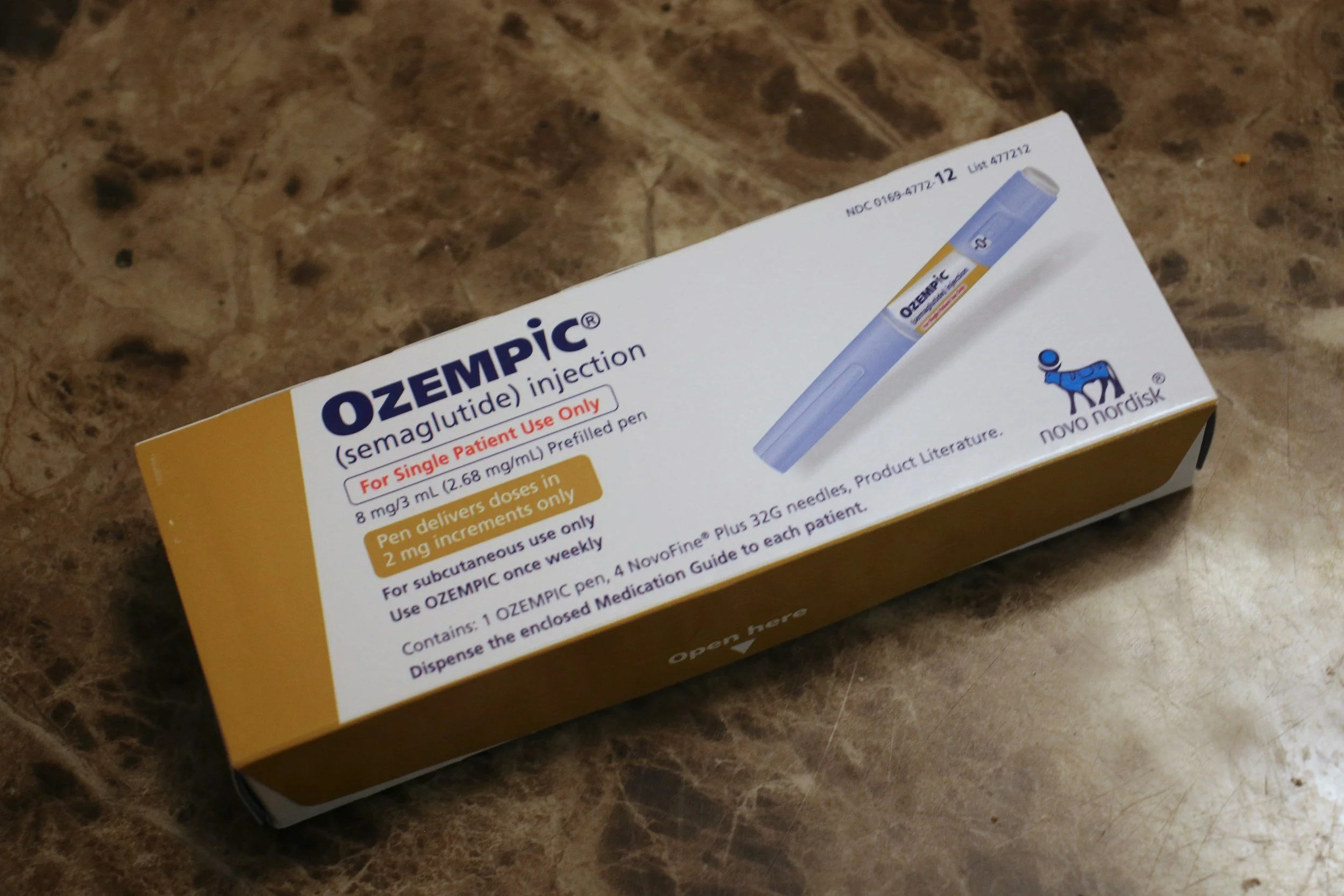
If you're taking Ozempic® (semaglutide), Wegovy® (semaglutide), Mounjaro® (tirzepatide), or Zepbound® (tirzepatide), you're not alone. Hair shedding has become one of the most common concerns patients ask about after starting these medications.
The good news is that GLP-1 medications do not appear to directly damage hair follicles. Although many people describe this as "hair loss," what most patients actually experience is temporary hair shedding, a condition known as telogen effluvium.
Understanding why it happens, and knowing when treatment is (and isn't) necessary, can help you protect your hair without unnecessary worry.
Do GLP-1 Medications Cause Permanent Hair Loss?
Probably not. Current evidence suggests that GLP-1 medications are not directly toxic to hair follicles. Instead, most dermatologists believe that the hair shedding some patients experience is usually telogen effluvium, a temporary condition in which a larger-than-normal number of hairs enter the resting (telogen) phase of the hair cycle before shedding several months later.
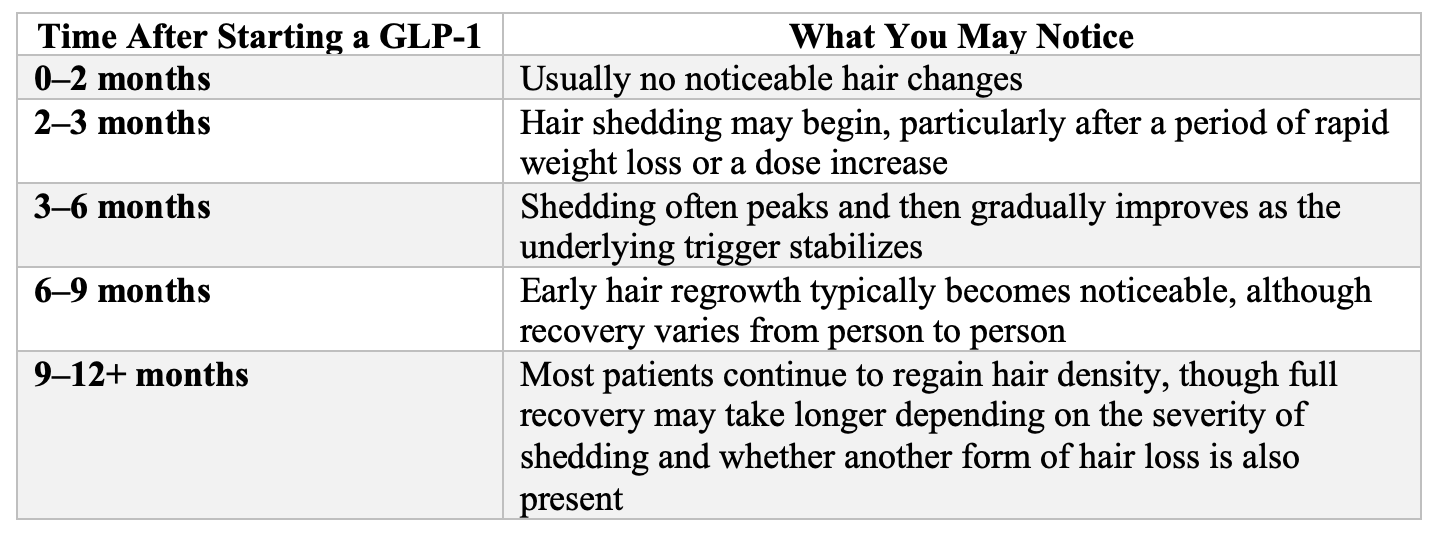
One of the hallmarks of telogen effluvium is that the shedding doesn't begin immediately after the trigger. Instead, it typically starts about 2 to 3 months later. For patients taking GLP-1 medications, this means the hair shedding often occurs several months after the period of most rapid weight loss, rather than immediately after starting the medication.
Telogen effluvium can be triggered by a variety of physiologic and psychological stressors, including rapid weight loss, acute illness, surgery, childbirth, emotional stress, and other significant changes to the body. In patients taking GLP-1 medications, the trigger is thought to be the rapid weight loss and metabolic changes associated with treatment, rather than the medication directly damaging the hair follicle.
This distinction is important because temporary hair shedding is not the same as permanent hair loss. In telogen effluvium, the hair follicle remains healthy and capable of producing new hair. Once the underlying trigger has stabilized, shedding typically improves over several months, with noticeable regrowth often occurring within 6 to 9 months, although full recovery may take longer depending on the individual.
Related: Hair Shedding vs. Hair Loss: How to Tell the Difference
Why Can GLP-1 Medications Cause Hair Shedding?
Several factors likely contribute.
Rapid Weight Loss
This is thought to be the biggest contributor.
Hair follicles are among the most metabolically active tissues in the body. During periods of rapid weight loss or significant calorie restriction, the body shifts resources toward essential organs and away from hair growth. As a result, more hairs enter the resting (telogen) phase before shedding two to three months later.
The same type of shedding has long been recognized after:
Bariatric surgery
Crash dieting
Major illness
High fever
Childbirth
This suggests that rapid weight loss itself, rather than the medication, is often the primary trigger.
Reduced Protein Intake
Many people naturally eat much less while taking GLP-1 medications.
Although this contributes to successful weight loss, it may also make it more difficult to consume enough protein to support normal hair growth.
Hair is primarily composed of keratin, a structural protein, making adequate protein intake especially important during periods of weight loss.
Vitamin and Mineral Deficiencies
Eating less may also increase the risk of nutritional deficiencies that can contribute to hair shedding, including:
Iron
Vitamin D
Vitamin B12
Zinc
Not everyone develops deficiencies, but they should be considered when shedding is significant or prolonged.
Metabolic Stress
Even positive changes can represent physiologic stress.
Rapid changes in metabolism, body weight, and nutrition can all influence the hair cycle and contribute to temporary shedding.
When Does Hair Shedding Start?
Hair shedding usually doesn't begin immediately after starting a GLP-1 medication.
Most patients notice increased shedding approximately 2–4 months after:
Starting treatment
Increasing the dose
Experiencing rapid weight loss
This delay reflects the normal timing of telogen effluvium rather than immediate injury to the hair follicle.
Timeline: What to Expect
Who Is Most Likely to Experience Hair Shedding?
Hair shedding appears to be more common in people who:
Lose weight rapidly
Consume inadequate protein
Develop nutritional deficiencies
Have experienced telogen effluvium in the past
Already have underlying female or male pattern hair loss
Can GLP-1 Medications Unmask Underlying Pattern Hair Loss?
One of the most important concepts to understand is that telogen effluvium can "unmask" underlying pattern hair loss (androgenetic alopecia).
Someone with early female or male pattern hair loss may have gradually thinning hair for years without noticing it because they still have enough overall hair density. However, when a temporary shedding event, such as rapid weight loss associated with a GLP-1 medication, causes a larger-than-normal number of hairs to shed, that underlying thinning can suddenly become much more noticeable.
In other words, the GLP-1 medication didn't cause pattern hair loss. It simply revealed hair loss that was already developing.
This distinction is important because telogen effluvium usually resolves on its own, whereas androgenetic alopecia is a progressive condition that often benefits from treatment. If your shedding doesn't improve over time, or you continue to notice widening of your part or decreasing hair density after the shedding has stopped, it's worth seeing a dermatologist to determine whether an underlying form of pattern hair loss is also present.
Should You Start Hair Loss Treatment?
This is one of the most common questions I hear from patients.
The answer depends on why you're shedding.
If You Had Healthy Hair Before Starting a GLP-1
If you had normal hair density before starting treatment and develop temporary shedding, hair-loss medication isn't always necessary.
Instead, focus on:
Eating adequate protein
Avoiding excessively rapid weight loss
Continuing resistance training to help preserve lean body mass
Correcting nutritional deficiencies if present
Many cases improve as the body adjusts.
If You Already Had Pattern Hair Loss
This is where the approach changes.
If you already had:
A widening part
Gradual thinning
A family history of androgenetic alopecia
Evidence of follicle miniaturization
I generally have a lower threshold for initiating treatment earlier, rather than waiting for more significant thinning to develop.
Rapid shedding can accelerate visible thinning in patients with underlying pattern hair loss, making early intervention an important consideration.
Related:Female Hair Loss: Causes, Diagnosis, and Treatment
Related:Minoxidil for Hair Loss: Benefits, Side Effects, and What to Expect
How Can You Help Protect Your Hair?
Although hair shedding isn't always preventable, several strategies may reduce the risk or support recovery:
Prioritize adequate daily protein intake
Avoid overly rapid weight loss when possible
Continue resistance training to preserve lean muscle mass
Eat a balanced diet rich in vitamins and minerals
Discuss laboratory testing with your physician if shedding becomes significant
Seek evaluation early if you already have signs of pattern hair loss
When Should You See a Dermatologist?
Consider scheduling an evaluation if:
Shedding lasts longer than six months
You notice visible thinning rather than shedding alone
Your part continues to widen
You develop patchy hair loss
Your scalp becomes itchy, painful, or inflamed
You're unsure whether you're experiencing telogen effluvium, androgenetic alopecia, or another hair disorder
Because multiple forms of hair loss can occur at the same time, an accurate diagnosis is essential.
The Bottom Line
Although many people describe it as "Ozempic hair loss," most patients taking GLP-1 medications actually experience temporary hair shedding rather than permanent hair loss. Rapid weight loss, reduced protein intake, nutritional deficiencies, and metabolic stress all likely contribute to this process. While many people recover without specific hair-loss treatment, those with underlying pattern hair loss may benefit from earlier intervention. If your shedding is persistent, worsening, or accompanied by visible thinning, a dermatologist can help determine the cause and recommend the most appropriate treatment plan.
About the Author
Dr. Dawn Queen, MD is a board-certified dermatologist in New York City specializing in medical dermatology, cosmetic dermatology, and hair loss. She serves as a Clinical Assistant Professor of Dermatology at Columbia University and completed an ISHRS-accredited hair restoration fellowship.
Learn more about Dr. Queen.
Frequently Asked Questions
Does everyone taking Ozempic lose hair?
No. Many people complete treatment without experiencing noticeable hair shedding. Individual risk likely depends on factors such as the rate of weight loss, nutritional status, and whether an underlying hair disorder is already present.
Which GLP-1 medications can cause hair shedding?
Temporary hair shedding has been reported with several GLP-1 medications, including Ozempic®, Wegovy®, Mounjaro®, and Zepbound®. Current evidence suggests the weight loss associated with these medications, rather than the medications themselves, is likely the primary contributor.
Should I stop taking my GLP-1 medication if my hair is shedding?
Not necessarily. In many cases, the shedding is temporary and improves over time. Before stopping a medication that may provide significant health benefits, discuss your concerns with the healthcare professional who prescribed it.
Should I start minoxidil?
Not everyone needs minoxidil. If the shedding is due to temporary telogen effluvium, observation and correction of contributing factors may be appropriate. However, patients with underlying female or male pattern hair loss may benefit from earlier treatment. A dermatologist can help determine which approach is best for your situation.
Will my hair grow back?
In most cases, yes. Because telogen effluvium does not permanently damage the hair follicle, shedding often improves and hair regrowth occurs once the underlying trigger stabilizes. Hair grows slowly, so noticeable improvement may take several months.
