
Rosacea vs Acne: How to Tell the Difference
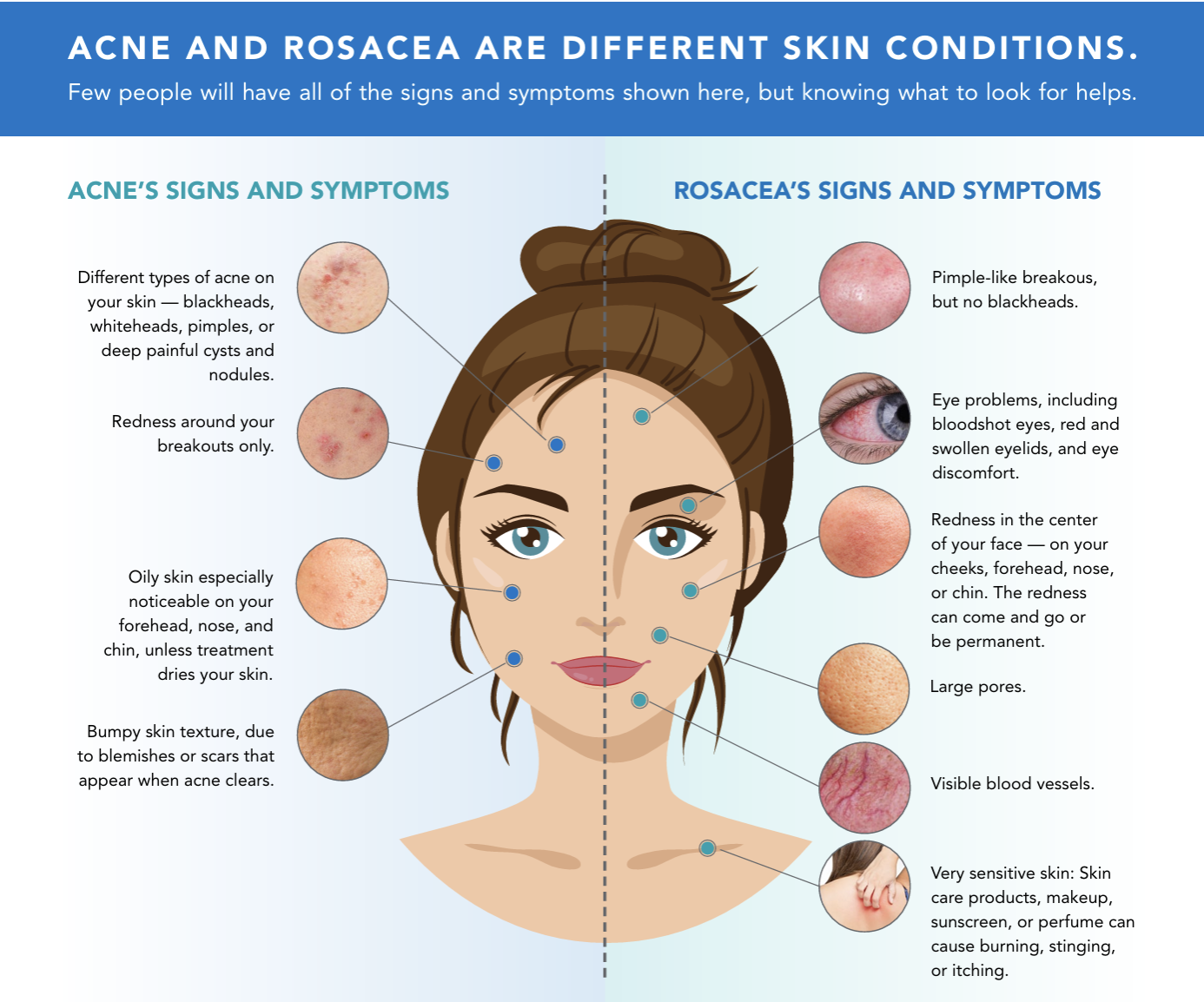
Credit: American Academy of Dermatology.
Rosacea and acne are two of the most common skin conditions I see in clinic, and they’re frequently confused with one another.
Both can cause red bumps on the face, but they are different conditions with different underlying causes. Because the treatments are not the same, correctly identifying the condition is an important first step toward improving your skin.
In fact, some acne treatments can worsen rosacea, while treatments that improve rosacea may do little for acne.
What Is Acne?
Acne develops when hair follicles become clogged with oil (sebum), dead skin cells, and bacteria, leading to inflammation within the pore.
Acne commonly causes:
Blackheads (open comedones)
Whiteheads (closed comedones)
Red bumps (papules)
Pustules ("pimples")
Painful cysts or nodules
Acne most commonly affects the:
Face
Chest
Back
Shoulders
Although acne is often associated with teenagers, it commonly persists into adulthood, particularly in women.
What Is Rosacea?
Rosacea is a chronic inflammatory skin condition that primarily affects the central face.
Unlike acne, rosacea is not caused by clogged pores. Instead, it involves abnormal inflammation and increased reactivity of the skin and blood vessels.
Common features include:
Persistent facial redness
Easy flushing
Small red bumps
Visible blood vessels (telangiectasias)
Burning or stinging sensations
Sensitive skin
Rosacea most commonly affects the:
Cheeks
Nose
Chin
Forehead
Symptoms often come and go, with flare-ups triggered by environmental or lifestyle factors.
Rosacea vs Acne: The Key Differences
Although the two conditions can look similar, there are several important differences.
Blackheads and Whiteheads
One of the easiest ways to distinguish acne from rosacea is the presence of comedones.
Acne commonly causes blackheads and whiteheads because pores become clogged.
Rosacea does not cause blackheads or whiteheads.
Persistent Redness
Rosacea often causes background redness that remains even when bumps improve.
Acne usually causes redness only around individual pimples.
Flushing
People with rosacea frequently notice episodes of flushing after:
Exercise
Heat
Alcohol
Spicy foods
Emotional stress
Sun exposure
Flushing is not a typical feature of acne.
Burning or Stinging
Rosacea commonly causes burning, stinging, or skin sensitivity.
Acne may be tender when individual pimples become inflamed, but generalized burning is much less common.
Location
Rosacea tends to affect the center of the face, particularly the cheeks and nose.
Adult acne more commonly involves:
Jawline
Chin
Lower cheeks
Forehead
Blood Vessels
Visible tiny blood vessels are a hallmark of rosacea. These are generally not seen with acne.
Rosacea vs Acne: Quick Comparison
Acne
Blackheads and whiteheads: Yes
Persistent facial redness: Sometimes
Flushing: Rare
Visible blood vessels: No
Burning or stinging: Uncommon
Rosacea
Blackheads and whiteheads: No
Persistent facial redness: Yes
Flushing: Common
Visible blood vessels: Common
Burning or stinging: Common
Can You Have Both Acne and Rosacea?
Yes. Many adults have features of both conditions at the same time.
For example, someone may have:
Persistent facial redness from rosacea
Hormonal acne along the jawline
Sensitive skin that reacts easily to skincare products
When both conditions are present, treatment often needs to address each separately.
Why the Diagnosis Matters
Because rosacea and acne have different underlying causes, the treatments are often different.
Acne treatment may include:
Benzoyl peroxide
Salicylic acid
Prescription acne medications
Rosacea treatment may include:
Prescription anti-inflammatory creams
Oral medications
Trigger avoidance
Laser treatments that target visible blood vessels and persistent redness
Using the wrong products can increase irritation and make symptoms more difficult to control.
When Should You See a Dermatologist?
It may be helpful to schedule an evaluation if you notice:
Persistent facial redness
Frequent flushing
Acne that does not improve after 8–12 weeks
Burning or stinging skin
Visible blood vessels
Breakouts that continue despite over-the-counter treatments
A dermatologist can determine whether your symptoms are due to acne, rosacea, or a combination of both, and recommend the most appropriate treatment plan.
The Bottom Line
Rosacea and acne may look similar, but they are different conditions with different causes and treatments.
Blackheads and whiteheads strongly suggest acne, while persistent redness, flushing, burning, and visible blood vessels are more characteristic of rosacea.
Because many adults have features of both conditions, an accurate diagnosis is often the first step toward achieving clearer, healthier skin.
About the Author
Dr. Dawn Queen, MD is a board-certified dermatologist in New York City specializing in medical dermatology, cosmetic dermatology, and hair loss. She serves as a Clinical Assistant Professor of Dermatology at Columbia University and completed an ISHRS-accredited hair restoration fellowship.
Learn more about Dr. Queen.
Frequently Asked Questions
How can I tell if I have acne or rosacea?
Blackheads and whiteheads are characteristic of acne but do not occur with rosacea. Persistent facial redness, flushing, burning, and visible blood vessels are more suggestive of rosacea.
Can rosacea look like acne?
Yes. Rosacea can cause red bumps and pustules that resemble acne, which is why the two conditions are often confused. Unlike acne, rosacea does not produce blackheads or whiteheads.
Can you have acne and rosacea at the same time?
Yes. Many adults have both conditions. This is especially common in people with hormonal acne who also experience facial flushing or sensitive skin.
What triggers rosacea flare-ups?
Common triggers include:
Sun exposure
Heat
Exercise
Alcohol
Spicy foods
Emotional stress
Hot beverages
Triggers vary from person to person.
Does rosacea ever go away?
Rosacea is a chronic condition, but it can often be controlled with appropriate treatment and trigger management. Many patients experience long periods with minimal symptoms.
Is rosacea caused by poor skincare?
No. Rosacea is not caused by poor hygiene or inadequate skincare. However, harsh products or over-exfoliation can worsen symptoms.
Can retinol make rosacea worse?
Retinoids can sometimes cause irritation in people with rosacea, particularly when first introduced. Some patients tolerate them well, while others benefit from alternative treatments or slower introduction under the guidance of a dermatologist.
Can laser treatments help rosacea?
Yes. Certain vascular lasers, such as the DermaV or a pulsed dye laser (Vbeam) and other vascular laser systems, can reduce persistent redness and visible blood vessels. A consultation can help determine whether laser treatment is appropriate for your specific type of rosacea.
