
What Causes Dark Marks After Acne?
Post-inflammatory hyperpigmentation (PIH) occurs when inflammation in the skin triggers increased pigment production.
When the skin experiences inflammation, such as from acne, picking, or irritation, cells called melanocytes produce more melanin. This pigment can remain in the skin after the acne lesion resolves, leaving behind a darker spot.
PIH is more likely to occur when:
Acne lesions are inflamed
Pimples are picked or squeezed
The skin is exposed to sunlight during healing
People with medium to darker skin tones are also more prone to developing post-inflammatory hyperpigmentation.
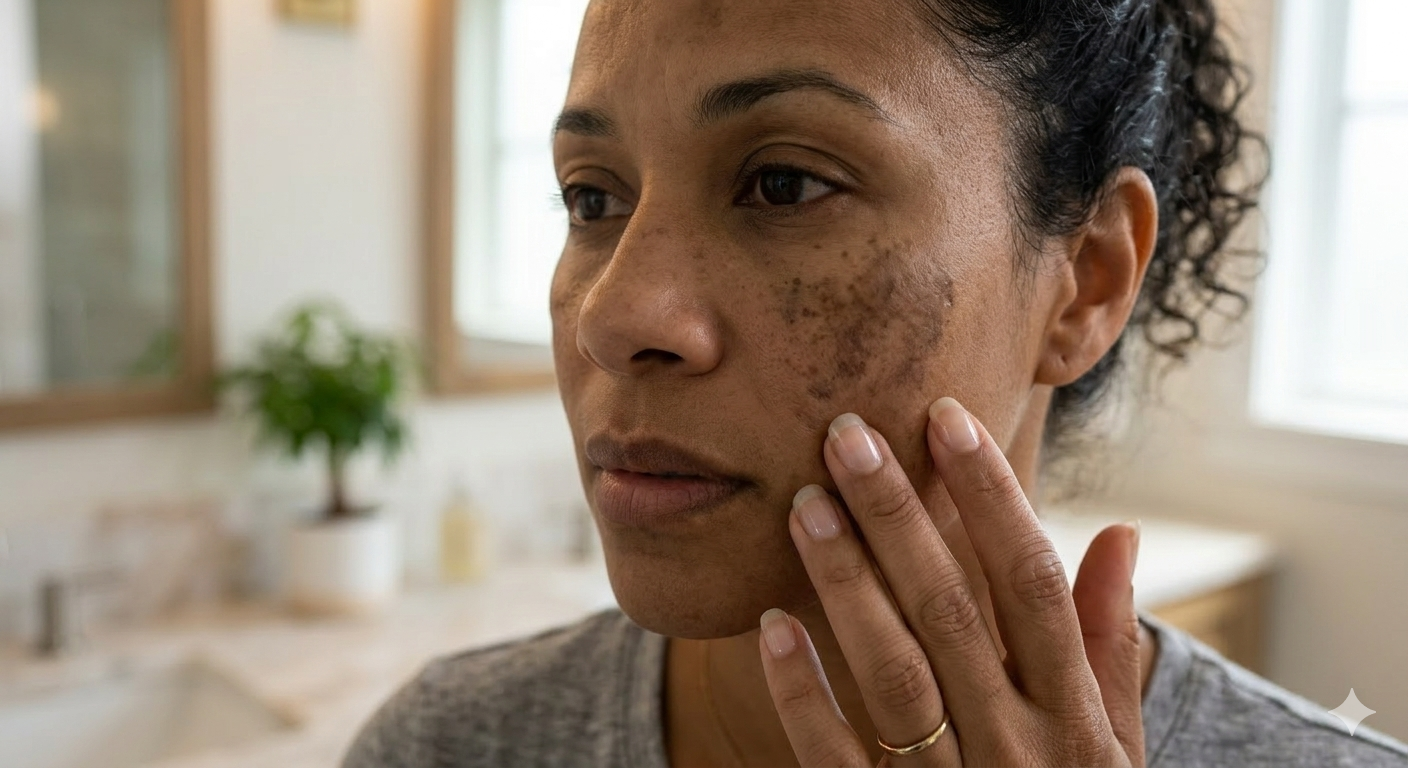
Dark Marks vs Acne Scars
Dark marks after acne are commonly confused with acne scars, but they are different conditions.
Post-inflammatory hyperpigmentation (PIH)
Appears as flat dark spots
Caused by increased pigment
Often fades over time
Acne scars
Caused by damage to the skin’s structure
May appear indented or raised
May not resolve
Usually require procedural treatments
Understanding the difference is important because the treatments are not the same.
How to Fade Dark Marks After Acne
While PIH often fades gradually on its own, treatment can help accelerate the process.
Sun Protection
Daily sunscreen is one of the most important steps for treating hyperpigmentation.
Sun exposure can stimulate melanocytes and darken existing marks, making them last longer.
Using a broad-spectrum SPF 30 or higher even on cloudy days helps prevent pigment from worsening while the skin heals.
Topical Treatments
Several skincare ingredients can help fade dark marks over time.
Examples include:
Retinoids – increase skin cell turnover
Azelaic acid – helps reduce inflammation and pigment production
Vitamin C – can brighten uneven pigmentation
Hydroquinone – a prescription-strength pigment lightening agent
Alpha hydroxy acids (such as glycolic acid) – exfoliate the skin and help fade superficial pigmentation
These treatments work gradually and typically require several weeks to months of consistent use.
Chemical Peels
Superficial chemical peels can help remove pigmented surface cells and improve skin tone.
These treatments may be performed by dermatologists to accelerate fading of hyperpigmentation.
Laser and Light Treatments
Certain laser and light-based treatments may be used to target excess pigment in the skin.
Because hyperpigmentation can sometimes worsen with overly aggressive laser treatments, these procedures are typically performed with caution and appropriate settings.
How Long Do Dark Marks Last?
Post-inflammatory hyperpigmentation can take several weeks to several months to fade.
Factors that influence how long marks last include:
Depth of inflammation
Skin tone
Sun exposure
Whether acne continues to occur
With appropriate treatment and sun protection, many marks gradually improve over time.
How to Prevent Dark Marks
Prevention focuses on reducing inflammation and protecting the skin while it heals.
Helpful strategies include:
Treating acne early
Avoiding picking or squeezing pimples
Using daily sunscreen
Using acne treatments that reduce inflammation
Controlling active acne is often the most important step in preventing new marks.
Frequently Asked Questions
Are dark marks after acne permanent?
Most dark marks caused by post-inflammatory hyperpigmentation are not permanent. These marks gradually fade as the skin renews itself and excess pigment is cleared.
However, the process can take several weeks to several months, depending on factors such as the depth of inflammation, skin tone, and sun exposure.
Can picking acne cause dark marks?
Yes. Picking or squeezing pimples significantly increases inflammation in the skin and raises the risk of developing post-inflammatory hyperpigmentation.
Trauma to the skin can stimulate melanocytes to produce more pigment, which may leave behind dark marks even after the acne lesion heals.
Do dark marks fade without treatment?
In many cases, dark marks will fade gradually on their own over time.
However, treatments such as retinoids, azelaic acid, vitamin C, or chemical peels can help accelerate the fading process. Consistent sun protection is also important to prevent marks from becoming darker.
Are dark marks the same as acne scars?
No. Dark marks from acne are caused by excess pigment in the skin, while acne scars result from damage to the skin’s underlying structure.
Dark marks are typically flat, whereas scars may appear indented, raised, or uneven.
How long do dark marks from acne usually last?
Post-inflammatory hyperpigmentation can last several weeks to several months.
Marks caused by deeper inflammation may take longer to fade, particularly in individuals with medium to darker skin tones. Sun exposure can also prolong the duration of hyperpigmentation.
Can sunscreen help fade dark marks?
Yes. Daily sunscreen use is one of the most important steps in treating hyperpigmentation.
Sun exposure can stimulate pigment production and make dark marks more noticeable. Using a broad-spectrum SPF 30 or higher helps prevent existing spots from becoming darker while the skin heals.
When should I see a dermatologist for dark marks?
You may benefit from evaluation if dark marks:
Persist for several months
Continue appearing despite acne treatment
Are difficult to distinguish from acne scars
A dermatologist can help determine the cause and recommend treatments that safely target pigmentation.
Will lasers help dark marks after acne?
In some cases, laser or light-based treatments can help improve post-inflammatory hyperpigmentation by targeting excess pigment in the skin.
However, these treatments must be used carefully. If the settings are too aggressive or if the skin is still inflamed, laser procedures can sometimes worsen hyperpigmentation, particularly in individuals with medium to darker skin tones.
For this reason, dermatologists often start with topical treatments and sun protection, and consider laser or procedural treatments when appropriate.
Is post-inflammatory hyperpigmentation more common in darker skin tones?
Yes. Post-inflammatory hyperpigmentation is more common and often more noticeable in individuals with medium to darker skin tones.
This is because melanocyte, the cells that produce pigment, are more active in these skin types and can respond more strongly to inflammation. As a result, acne, irritation, or skin injury may be more likely to leave behind dark marks.
With appropriate treatment and sun protection, these marks can still improve, but they may take longer to fade.
