
Am I a Good Candidate for a Hair Transplant?
Hair transplantation can be an effective way to restore hair density and improve the appearance of the hairline. However, not everyone with hair loss is the right candidate for surgery. Understanding when hair transplantation works well, and when other treatments may be more appropriate, is an important part of the evaluation process.
Below are the key factors dermatologists consider when determining whether someone is a good candidate for a hair transplant.
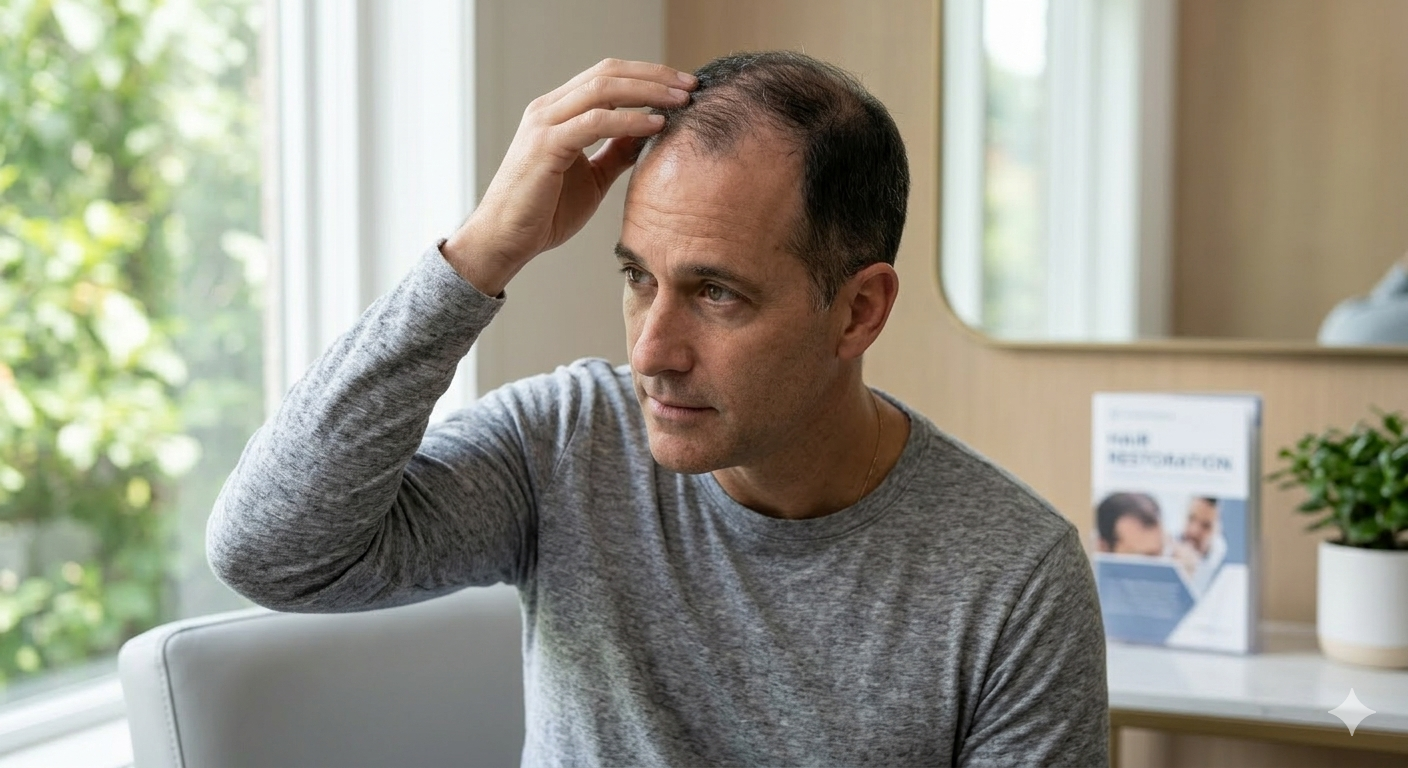
What Does a Hair Transplant Actually Do?
A hair transplant redistributes permanent hairs from the donor area, typically the back and sides of the scalp, to areas affected by hair loss.
These donor hairs are genetically resistant to the hormone dihydrotestosterone (DHT), which drives androgenetic alopecia. Once transplanted, they generally continue to grow long term.
It is important to understand that hair transplantation does not create new hair follicles. Instead, it redistributes existing hair from one part of the scalp to another.
The Best Candidates for Hair Transplant Surgery
1. People With Pattern Hair Loss
The most common reason for hair transplantation is androgenetic alopecia, also known as male or female pattern hair loss. Both men and women can be candidates for surgery.
Typical features include:
Receding hairline
Thinning at the crown
Gradual loss of density on the top of the scalp
Preservation of hair on the back and sides of the scalp
These patients usually have a stable donor area, which makes transplantation possible.
2. Patients With Adequate Donor Hair
Successful hair transplantation depends heavily on the quality and density of donor hair.
Factors that influence donor suitability include:
Donor hair density
Hair thickness (coarser hair often provides more visual coverage)
Hair color contrast with the scalp
Curl or wave pattern
Previous surgeries
A strong donor area allows surgeons to harvest grafts while maintaining a natural appearance in the donor region.
3. Individuals With Realistic Expectations
Hair transplantation can significantly improve hair density and hairline shape, but it cannot recreate the same density someone had as a teenager.
Good candidates understand that:
Hair density will be improved, not fully restored
Multiple sessions may sometimes be needed
Hair loss may continue over time and require medical management
Realistic expectations are an important part of achieving a satisfying long-term result.
4. Patients Whose Hair Loss Pattern Is Relatively Stable
Hair loss is often progressive, especially in androgenetic alopecia. If transplantation is performed too early, surrounding native hairs may continue to thin, which can lead to an unnatural appearance over time.
For many patients, stability does not simply mean that hair loss has stopped on its own. Instead, it often means that the progression of hair loss has been controlled with medical therapy.
Common treatments used to stabilize hair loss include:
Topical or oral minoxidil
Finasteride or other anti-androgen therapies
Low-level laser therapy
Platelet-rich plasma (PRP) in selected cases
Patients who have been on stable medical treatment for a period of time and have slowed progression of hair loss are often the best surgical candidates. Stabilizing the condition helps preserve existing hair and allows surgeons to plan a more durable and natural-appearing transplant.
When Hair Transplant May Not Be the Best Option
Hair transplantation is not appropriate for every type of hair loss.
Advanced Hair Loss With Limited Donor Hair
Hair transplantation works by redistributing existing hair, not creating new follicles. Patients with very advanced hair loss may not have enough donor hair to adequately cover large areas of thinning.
In these situations, there may be a mismatch between:
The size of the balding area, and
The available donor supply on the back and sides of the scalp.
Even when transplantation is technically possible, the achievable density may be limited. Careful planning is necessary to determine whether surgery can produce a natural and meaningful improvement.
Diffuse Hair Loss Without a Stable Donor Area
Conditions such as diffuse unpatterned alopecia affect the entire scalp, including the donor region. In these cases, there may not be a reliable donor supply for transplantation.
Certain Types of Scarring Alopecia
Some inflammatory conditions, such as lichen planopilaris or frontal fibrosing alopecia, can destroy hair follicles and may continue to progress even after surgery.
For these patients, it is often necessary to control the disease medically before considering transplantation, and in some cases transplantation may not be recommended.
Other Factors That Influence Results
Even among good candidates, results can vary depending on several biological factors, including:
Hair caliber and texture
Donor density
Scalp characteristics
Extent of hair loss
Hairline design and graft placement
A careful evaluation allows surgeons to develop a long-term restoration plan tailored to each patient.
Final Thoughts
Hair transplantation can produce natural, long-lasting improvements in hair density and hairline shape for the right candidates. However, the best results come from careful patient selection, long-term planning, and a combination of medical and surgical treatment when appropriate.
A consultation with a dermatologist experienced in hair loss and hair restoration can help determine whether a hair transplant, or another treatment approach, is the best option for your specific goals.
Common Questions About Hair Transplant Candidacy
Do hair transplants last long term?
Hair transplants are designed to be long-lasting because the transplanted hairs typically come from the donor area on the back and sides of the scalp, where follicles are genetically more resistant to androgenetic hair loss.
Once these hairs are transplanted, they usually continue to grow permanently.
However, hair transplantation does not stop the progression of hair loss in other areas of the scalp. Over time, non-transplanted hairs may continue to thin, which is why many patients benefit from medical treatments that help slow or stabilize hair loss.
Proper surgical planning and long-term hair loss management are important for maintaining natural-looking results over time.
Am I too young for a hair transplant?
Hair transplantation is usually recommended once hair loss patterns become more stable. In younger patients, hair loss may continue to progress, which can affect long-term planning and results. However, there is no hard cutoff if you understand the risks and benefits of the procedure.
What if my hair loss keeps progressing after surgery?
Hair transplantation redistributes existing hair, but it does not stop ongoing hair loss. Many patients benefit from medical treatments that help slow progression and preserve existing hair. The best result is when both transplanted hairs and native hairs remain long-term.
What if I don’t have enough donor hair?
Hair transplantation depends on having a stable donor area, typically on the back and sides of the scalp. If donor density is limited or hair loss is very advanced, surgery may not be able to achieve meaningful coverage. In some cases, other body sources such as beard or chest hair may be considered.
Will a hair transplant look natural?
When properly planned and performed, modern hair transplantation can produce very natural results, particularly when hairline design and graft placement are carefully considered.
Do I need medications after a hair transplant?
In many cases, medical therapy is recommended to help preserve existing hair and protect long-term results. Pursuing concurrent management with a dermatologist is highly recommended.
