
The Correct Order to Apply Your Skincare Products
Many skincare ingredients are effective on their own.
But how they are applied, and in what order, can significantly affect how well they work. Building a skincare routine is the key to your products working for you.
In clinic, I often see patients using effective products, but applying them in the wrong order or combining too many active ingredients in the same routine.
This can lead to irritation, reduced effectiveness, or inconsistent results.
In many cases, improving a routine is less about changing products and more about using them correctly.
Why Order and Layering Matter
Skincare products are designed to be absorbed in a specific way.
Applying them in the wrong order can:
reduce absorption of active ingredients
increase the risk of irritation
make it difficult to assess what is actually working
A structured approach allows each product to perform as intended.
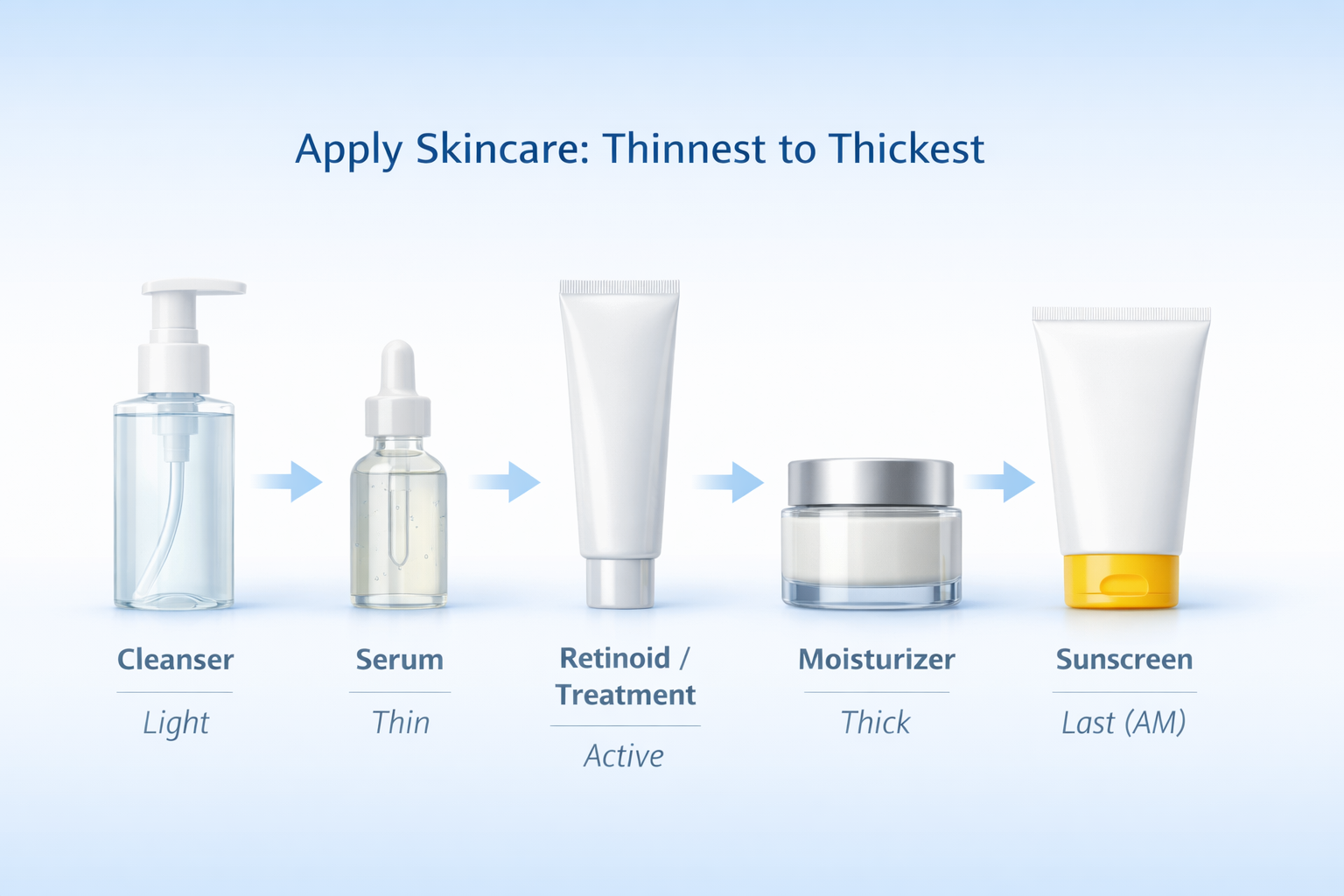
A General Rule: Apply From Thinnest to Thickest
As a general guideline, skincare products are applied from the lightest to the heaviest texture.
This typically means:
cleanser
water-based serums (e.g., vitamin C)
treatment products (e.g., retinoids, exfoliants)
moisturizer
sunscreen (morning)
Heavier products can block the absorption of lighter ones, which is why order matters.
Where Active Ingredients Fit In
Active ingredients are usually applied after cleansing and before moisturizer.
However, not all actives should be used at the same time.
For example:
vitamin C is often used in the morning
retinoids are typically used at night
exfoliating acids are best used on separate nights from retinoids, although some patients with good tolerance may use them together
Spacing these out helps reduce irritation while maintaining effectiveness.
Common Layering Mistakes
Even well-intentioned routines can become less effective when layering is inconsistent.
Common mistakes include:
applying moisturizer before active ingredients
layering multiple strong actives in the same routine
using retinoids and exfoliating acids together
applying products too quickly without allowing absorption
These patterns can interfere with results and increase the risk of irritation.
Do You Need to Wait Between Steps?
In most cases, long wait times between steps are not necessary.
Allowing a short period for products to absorb can improve comfort and reduce pilling, but the overall structure of the routine matters more than exact timing.
A Simple, Structured Routine
Morning
• gentle cleanser
• vitamin C (if tolerated)
• moisturizer
• sunscreen
Evening
• gentle cleanser
• retinoid or exfoliating acid (not both)
• moisturizer
Using a structured routine helps improve tolerance and consistency, which often leads to better results over time.
The Bottom Line
Using the right products is important, but how they are applied also matters.
Correct layering and timing can improve both tolerance and effectiveness.
In many cases, small adjustments in how products are used can lead to more consistent results.
About the Author
Dr. Dawn Queen, MD is a board-certified dermatologist in New York City specializing in medical dermatology, cosmetic dermatology, and hair loss. She serves as a Clinical Assistant Professor of Dermatology at Columbia University and completed an ISHRS-accredited hair restoration fellowship.
Learn more about Dr. Queen.
Frequently Asked Questions
Should I apply moisturizer before or after retinol?
Retinoids are typically applied at night after cleansing and before moisturizer.
In patients with sensitive skin, applying moisturizer both before and after (“buffering” or the “retinoid sandwich”) may improve tolerance. This can reduce irritation, although it may slightly decrease penetration.
Can I use vitamin C and retinol in the same routine?
These are generally used at different times of day. Vitamin C in the morning and retinoids at night.
Separating them helps minimize irritation and allows for more consistent use.
Do I need to wait between applying products?
In most cases, long wait times are not necessary.
Allowing a short period for each product to absorb, typically seconds to a minute, is sufficient. Routine structure is more important than strict timing.
Can I layer multiple serums?
This depends on the ingredients.
Layering hydrating or non-active serums is generally well tolerated, but combining multiple active ingredients can increase irritation without improving results.
What happens if I apply products in the wrong order?
Applying products in the wrong order can reduce absorption and limit effectiveness.
For example, applying a heavier product like a moisturizer before a treatment serum may prevent the active ingredient from penetrating as intended.
Why is my skincare pilling when I layer products?
Pilling can occur when products do not absorb properly or when incompatible formulations are layered.
This is more common when multiple products are applied too quickly or when too many layers are used. Simplifying the routine or allowing brief absorption time can help.
How do I know which active ingredient to prioritize?
This depends on your primary concern.
For example, retinoids are often used for acne and photoaging, while exfoliating acids may help with texture or congestion. Focusing on one primary concern at a time often leads to more consistent results.
