
Hair Transplant Recovery Timeline: What to Expect After Surgery
Hair transplantation is a highly effective treatment for restoring hair density in areas affected by hair loss. One of the most common questions patients have before surgery is what recovery looks like and how long it takes to see results.
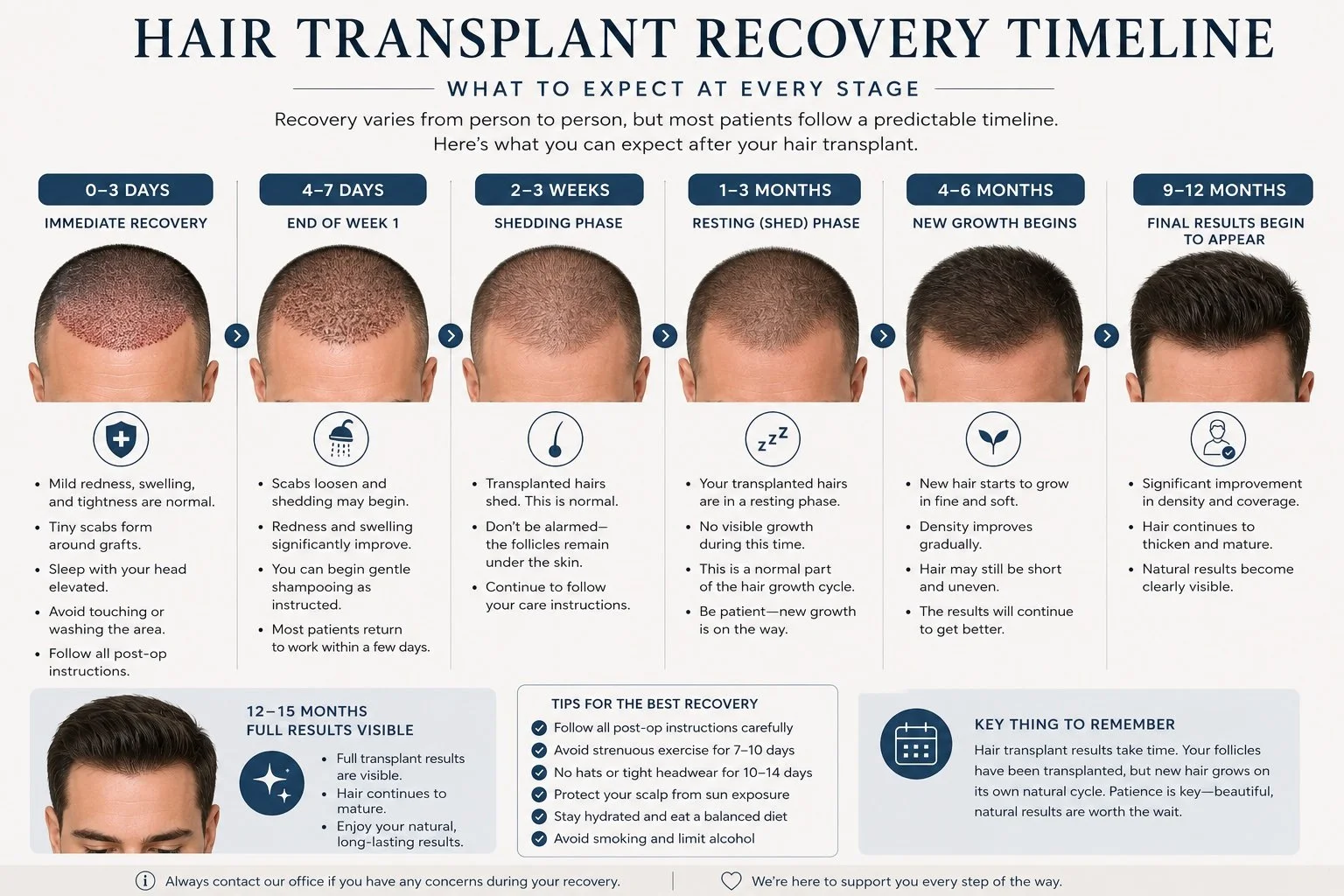
While healing after a hair transplant is usually straightforward, the process occurs in several stages. Recovery timelines are generally similar for FUT and FUE procedures, although patients undergoing FUT may experience additional healing along the donor incision.
Understanding the typical timeline can help patients know what to expect during recovery.
The First 24–48 Hours
Immediately after surgery, the scalp may feel tender, tight, or mildly sore. Small graft sites will be visible in the transplanted area.
During this time patients may notice:
Mild swelling of the scalp or forehead
Redness in the transplant area
Small scabs around the graft sites
Most patients will return home the same day after the procedure.
Your surgeon will provide specific instructions on how to care for the scalp, including how to wash the hair and protect the grafts.
Days 3–7: Early Healing
During the first week, the scalp continues to heal.
Common changes include:
Small scabs forming around the transplanted follicles
Mild itching as the scalp heals
Gradual reduction in redness
These scabs typically begin to fall off naturally within 7–10 days.
Patients are generally advised to avoid heavy exercise, excessive sweating, or rubbing the scalp during this period to protect the grafts.
Weeks 2–4: Shedding Phase
Around two to four weeks after surgery, many patients notice that the transplanted hairs begin to shed.
Many patients feel concerned during this phase because the transplanted hairs shed before new growth begins. This is a normal part of the recovery process and does not mean the procedure failed.
This stage, sometimes called “shock loss,” is a normal part of the hair growth cycle.
Although the hair shafts fall out, the transplanted follicles remain in place beneath the skin and will begin producing new hair over time.
Months 3–4: Early Regrowth
New hair growth typically begins around three to four months after surgery.
At first, the new hairs may appear:
Thin
Light in color
Soft in texture
This early growth gradually thickens as the hair cycle progresses.
Months 6–9: Noticeable Improvement
Between six and nine months, patients usually begin to see significant improvement in hair density.
The transplanted hairs continue to:
Grow longer
Become thicker
Blend more naturally with surrounding hair
At this stage, many patients begin to appreciate the developing results.
Months 9–18: Final Results
Most patients appreciate their final results between 9-12 months after surgery, although continued maturation and thickening may occur for up to 12–15 months, particularly in the crown area.
At this point:
Hair density is much more visible
Hair texture has matured
The transplanted hair can be cut, styled, and treated like natural hair
Tips for a Smooth Recovery
Following your surgeon’s post-procedure instructions is essential for optimal healing and results.
General recommendations often include:
Avoid touching or scratching the graft sites
Follow washing instructions carefully
Avoid strenuous exercise during early healing
Protect the scalp from sun exposure
These steps help ensure that transplanted follicles heal properly and continue growing.
The Bottom Line
Hair transplant recovery is gradual, and visible results take time to develop.
While initial healing occurs within the first couple of weeks, new hair growth typically begins several months after surgery, with final results appearing around one year.
Understanding the recovery timeline can help patients set realistic expectations and feel more confident throughout the process.
Considering a hair transplant?
A consultation can help determine whether you are a candidate for hair transplantation and review expected results, recovery, and treatment options.
About the Author
Dr. Dawn Queen, MD is a board-certified dermatologist in New York City specializing in medical dermatology, cosmetic dermatology, and hair loss. She serves as a Clinical Assistant Professor of Dermatology at Columbia University and completed an ISHRS-accredited hair restoration fellowship.
Learn more about Dr. Queen.
Frequently Asked Questions
When can I wash my hair after a hair transplant?
The donor area on the back of the scalp can usually be gently washed within 24–48 hours after surgery.
The transplanted grafts in the recipient area are typically left undisturbed for at least 48 hours, and sometimes longer depending on your surgeon’s instructions. After this initial period, patients are usually advised to begin very gentle washing techniques to keep the scalp clean while protecting the newly placed grafts.
Your surgeon will provide specific instructions on when and how to resume washing.
When can I return to work after a hair transplant?
Most patients are physically able to return to work the next day if desired.
However, during the first week, the scalp may have visible redness and small scabs, so some patients prefer to work from home or take several days off until the early healing phase improves.
Your surgeon can provide individualized guidance based on the procedure and your work environment.
When can I exercise again?
Light activities such as walking are often allowed within several days after surgery.
More strenuous exercise, heavy lifting, or activities that cause significant sweating are typically avoided for about 1–2 weeks to help protect the grafts during early healing.
When can I wear a hat after a hair transplant?
Recommendations vary depending on the procedure and surgeon. Many patients are able to wear a loose-fitting hat after the first several days, but direct pressure on newly placed grafts should be avoided during early healing.
When can I get a haircut after hair transplant?
Haircuts of the surrounding non-transplanted hair are often possible within the first 2 weeks. However, cutting or shaving the transplanted area is typically delayed until the grafts have fully healed. Your surgeon will provide individualized recommendations based on your procedure.
Do transplanted hairs fall out after surgery?
Commonly yes. The transplanted hair shafts usually shed within the first two to four weeks after surgery.
This phase is normal and temporary. The transplanted follicles remain in place beneath the skin and will begin producing new hair growth in the following months.
Will people be able to tell I had a hair transplant?
During the first week after surgery, the scalp may have mild redness and small scabs, which can make the procedure noticeable.
Once the scalp heals and the transplanted hairs shed during the early recovery phase, it typically becomes much less obvious that a procedure was performed. When new hair begins to grow several months later, the hair will thicken gradually rather than all at once. That means it will appear natural and blend with the surrounding hair.
Do hair transplants last long term?
Hair transplants are designed to be long lasting because the transplanted hairs usually come from the donor area on the back and sides of the scalp, where follicles are genetically more resistant to hair loss.
However, transplantation does not stop hair loss in untreated areas of the scalp, which is why many patients benefit from medical therapies that help stabilize ongoing hair thinning.
