
Retinoids Explained: What They Do and How to Use Them
Retinoids are among the most studied and widely recommended ingredients in dermatology. These vitamin A–derived compounds are used to treat acne, hyperpigmentation, and signs of skin aging.
Despite their popularity, many people are unsure how retinoids work, how or when to start using them, and what form is best.
Understanding the differences between retinol, retinal, and prescription retinoids can help patients choose the right option for their skin.
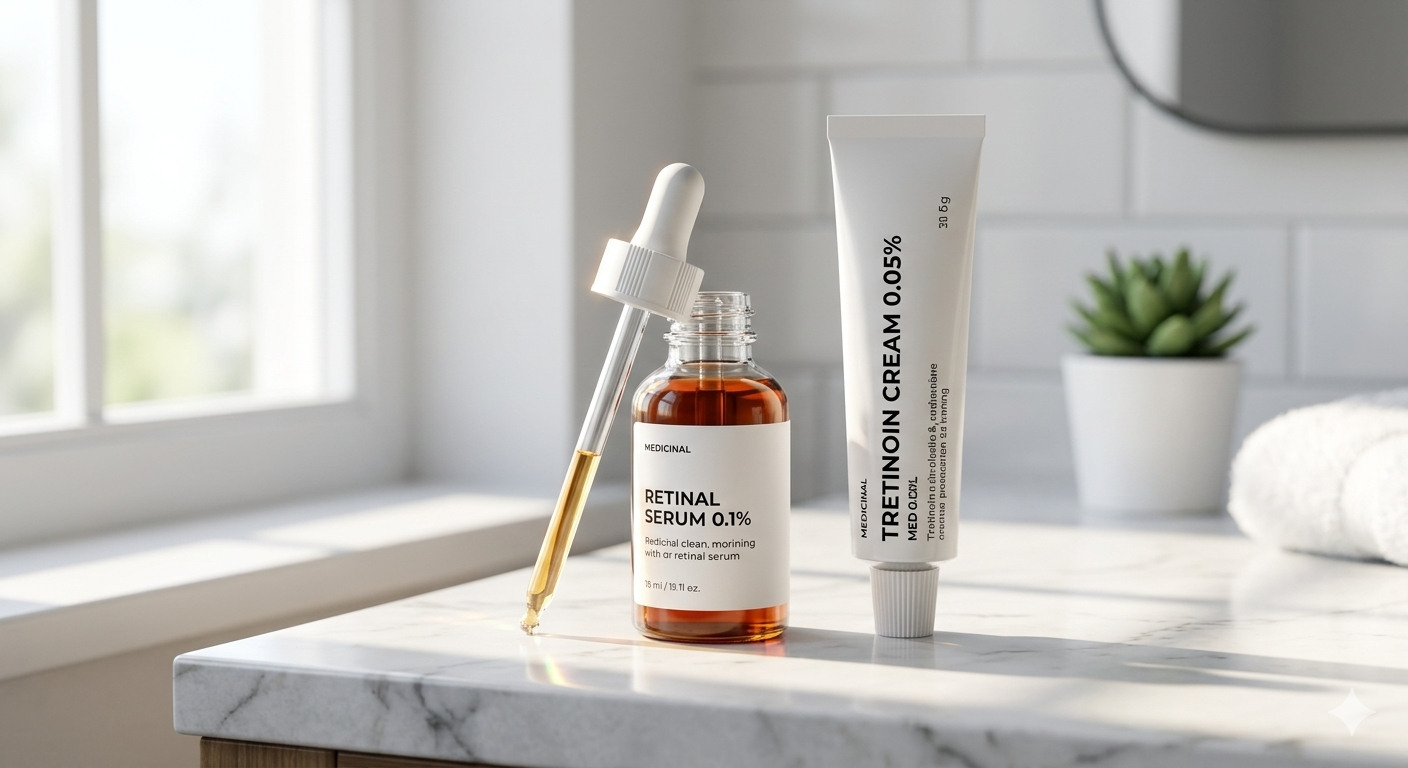
What Are Retinols/Retinoids?
Retinoids are a group of compounds derived from vitamin A that influence how skin cells grow, mature, and shed. Retinols are a type of retinoid.
They work by:
Increasing skin cell turnover
Preventing clogged pores
Stimulating collagen production
Improving uneven pigmentation
Because of these effects, retinoids are commonly used to treat:
Acne
Dark marks and hyperpigmentation
Fine lines and wrinkles
Uneven skin texture
Types of Retinoids
Not all retinoids are the same. Some are available over the counter, while others require a prescription.
Retinol
Retinol is the most common over-the-counter retinoid found in skincare products.
After application, retinol must be converted in the skin into its active form, retinoic acid, before it can affect skin cells.
Because of these conversion steps, retinol tends to work more gradually and is generally better tolerated by beginners.
Retinal (Retinaldehyde)
Retinal sits one step closer to retinoic acid in the conversion pathway.
This means it may be slightly more potent than retinol while still being gentle and available without a prescription.
Retinal products are increasingly popular because they may provide stronger results than retinol with relatively good tolerability.
Prescription Retinoids
Prescription retinoids such as tretinoin, adapalene, and tazarotene act directly on skin receptors or convert more efficiently to active retinoic acid.
These medications are typically more potent and are often used for:
Acne treatment
Photoaging
Hyperpigmentation
Because they are stronger, they may also cause more irritation when first introduced.
What Skin Concerns Do Retinoids Treat?
Retinoids are considered one of the most versatile treatments in dermatology.
Acne
Retinoids are considered a foundational treatment for can.
Acne often begins when dead skin cells accumulate inside hair follicles and mix with oil (sebum), forming microcomedones, the earliest stage of acne.
Retinoids help by:
Normalizing how skin cells shed inside pores
Preventing the formation of clogged pores (comedones)
Reducing inflammation in the skin
Because they target this early step in acne development, retinoids can help prevent new breakouts while also treating existing acne.
For this reason, dermatologists often recommend retinoids as part of long-term acne management.
Hyperpigmentation
By increasing skin cell turnover, retinoids help fade post-inflammatory hyperpigmentation and uneven skin tone over time.
As the skin renews itself, pigmented cells gradually move toward the surface and are shed, which can help lighten dark marks left behind after acne or skin inflammation.
Because this process occurs gradually, improvement typically becomes noticeable over several weeks to months of consistent use.
Signs of Skin Aging
Retinoids stimulate collagen production and improve skin texture.
They also help normalize skin cell turnover, which can lead to smoother, more even-looking skin.
Over time, retinoids can help reduce the appearance of:
• Fine lines
• Wrinkles
• Rough skin texture
These effects develop gradually with consistent use and are one reason retinoids are considered one of the most well-studied topical treatments for photoaging.
When to start using retinoids
Retinoids can be introduced at different ages depending on the skin concern being treated.
For acne, retinoids are often used during the teenage years or early adulthood, as they help prevent clogged pores and reduce breakouts.
For skin maintenance and signs of aging, many dermatologists suggest starting a retinoid in the mid-to-late 20s or early 30s, when collagen production naturally begins to decline.
Starting earlier does not necessarily mean stronger products are needed. Many people begin with lower-strength formulations such as retinol or retinal, and adjust over time depending on their skin’s tolerance and goals.
The most important factors are consistent use, gradual introduction, and daily sun protection.
How to Start Using Retinoids
Because retinoids can cause irritation when first introduced, dermatologists often recommend starting gradually.
Helpful tips include:
Begin using the product 2–3 nights per week
Apply a pea-sized amount for the entire face
Follow with a moisturizer
Increase frequency gradually as the skin adapts
It is also important to use daily sunscreen, since retinoids increase skin sensitivity to sunlight.
Common Side Effects
When starting retinoids, some temporary skin reactions are common.
These may include:
Mild redness
Dryness
Peeling
Skin sensitivity
These effects usually improve as the skin adjusts to the medication.
The Bottom Line
Retinoids are one of the most effective and well-studied treatments for acne, hyperpigmentation, and signs of skin aging.
Whether using retinol, retinal, or prescription retinoids, consistent use and gradual introduction can help maximize benefits while minimizing irritation.
For many patients, retinoids become a long-term cornerstone of skincare.
What is the difference between retinol, retinal, and retinoids?
Retinoids are a family of vitamin A–derived compounds used in dermatology. Retinol and retinal (retinaldehyde) are both over-the-counter retinoids, while medications such as tretinoin, adapalene, and tazarotene are prescription retinoids.
These ingredients differ in how they convert to retinoic acid, the active form that affects skin cells.
The conversion pathway generally looks like this:
Retinol → Retinal → Retinoic Acid
Because retinal is one step closer to the active form, it may be slightly more potent than retinol, while prescription retinoids act more directly and are typically stronger.
How long does it take for retinoids to work?
Retinoids work gradually because they influence the skin’s natural renewal process.
Some people begin noticing improvement in acne or skin texture within 6–8 weeks, while more visible improvements in pigmentation or fine lines may take several months (>12 weeks) of consistent use.
Can retinoids cause skin purging?
Some people experience temporary breakouts when first starting a retinoid.
This happens because retinoids increase skin cell turnover, which can bring underlying clogged pores to the surface more quickly. This phase is usually temporary and will only last several weeks. It should improve as the skin adjusts.
Can retinoids irritate the skin?
Yes. Dryness, redness, and mild peeling are common when starting retinoids.
These effects are usually temporary and can often be minimized by starting slowly, using moisturizer, and gradually increasing frequency of use.
Using a moisturizer before AND after retinoid application is a common trick to improve tolerability.
Should retinoids be used with sunscreen?
Yes. Daily sunscreen is important when using retinoids because they can make the skin more sensitive to sunlight.
Using a broad-spectrum SPF 30 or higher helps protect the skin and prevents worsening of hyperpigmentation.
Can retinoids be used every night?
Many people eventually tolerate nightly use, but it is usually best to start a few nights per week and gradually increase frequency as the skin adapts.
This approach helps minimize irritation while allowing the skin to adjust.
Can retinoids be used during pregnancy?
Most dermatologists recommend avoiding retinoids during pregnancy. This includes prescription retinoids as well as many over-the-counter retinol products.
Patients who are pregnant or planning pregnancy should discuss alternative skincare options with their physician.
